
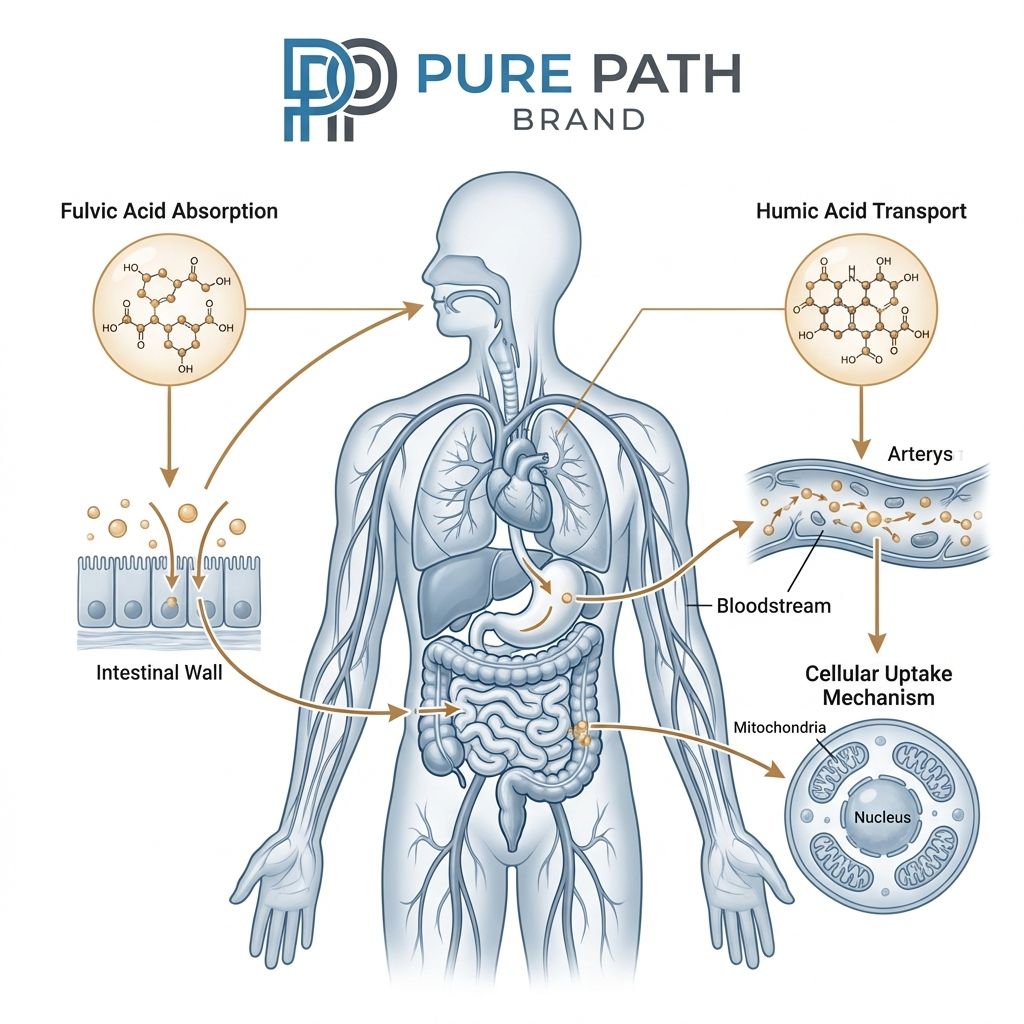
Two fulvic acid products can assay identically on paper and behave completely differently in a glass of water — and in a body. The variable is extraction. This page explains what the industrial shortcuts destroy and why Pure Path runs cold-water extraction even though it is slower and more expensive.
What Extraction Has to Accomplish
Raw humate ore is not a supplement. The fulvic and humic fractions have to be pulled out of the mineral matrix, separated from each other, and concentrated — without wrecking the molecular features that make them useful. Those features are specific and fragile:
- Carboxyl and phenolic hydroxyl groups — the mineral-gripping "hands" responsible for chelation and pH adaptability.
- Low molecular weight of the fulvic fraction — the reason it can interact with cell membranes at all.
- Redox activity — the electron-donating behavior behind reported antioxidant effects.
The Industry Shortcuts
Aggressive alkaline extraction (hot sodium hydroxide) is fast and cheap and remains common. It also oxidizes and restructures humic substances. High heat accelerates every degradation pathway at once. Harsh acid precipitation can leave residues and alter functional-group chemistry. The product still weighs the same and can still be labeled "fulvic acid" — the label does not measure whether the hands still grip.
What Cold-Water Extraction Preserves
Running extraction cold, with water as the solvent, is the conservative path: no thermal degradation, no aggressive reagents to neutralize, functional groups left as geology built them. The tradeoff is honest — lower yields, longer process time, higher cost per finished gram. We consider that the price of shipping a molecule that still works.
How to Audit Any Brand (Including Us)
- Ask how it was extracted. If the answer is vague ("proprietary process"), assume heat and lye.
- Demand third-party testing covering heavy metals and potency. Every Pure Path lot is independently verified.
- Check solubility behavior. True low-molecular-weight fulvic dissolves clear across a wide pH range; murky sediment suggests humic carryover or degraded material.
- Ask where the humate came from. Auditable domestic deposits (ours: Utah, USA) beat undisclosed imports.
This receipts-first posture is the whole brand thesis: the product pages surface SKUs and lot tracking because claims without receipts are just marketing.
These statements have not been evaluated by the FDA. Educational content, not medical advice.